The Infographic Energy Transition Coloring Book
Coloring In the Energy Transition, Not Slowing It Down
Making the path to climate neutrality tangible through creative infographics and storytelling
Unsupported file type.
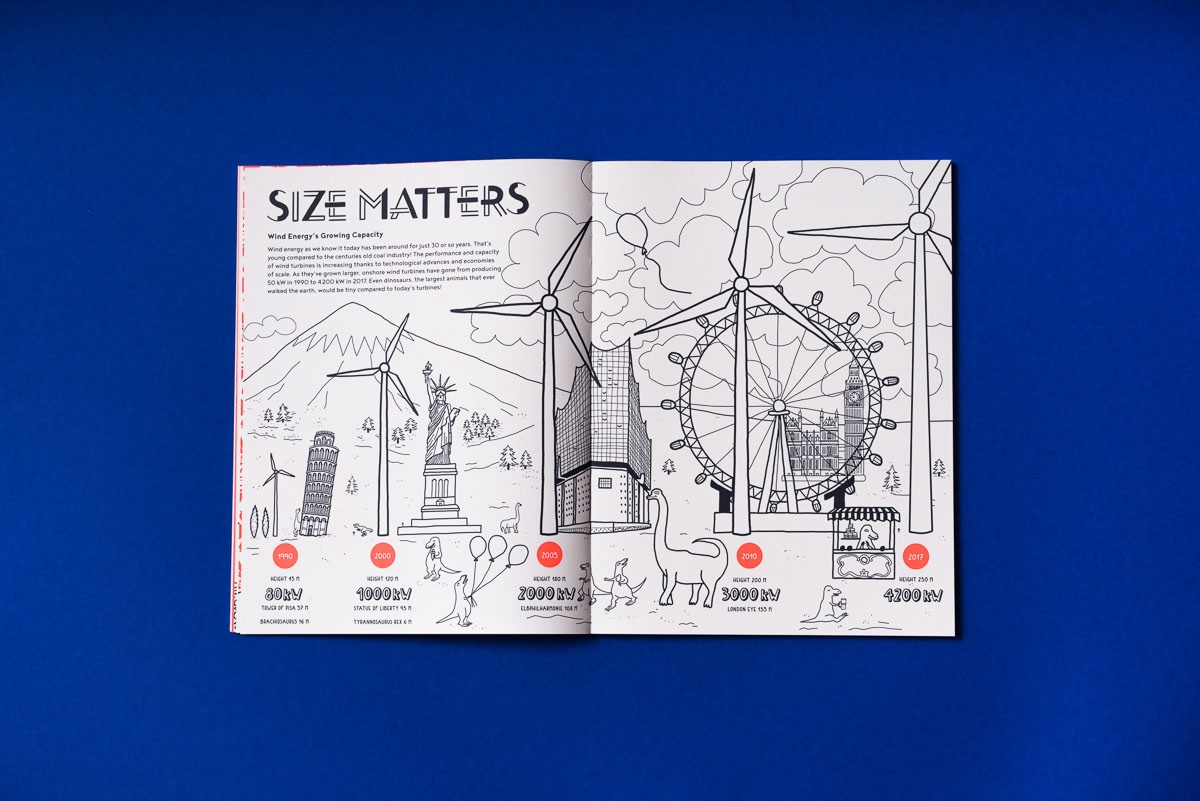
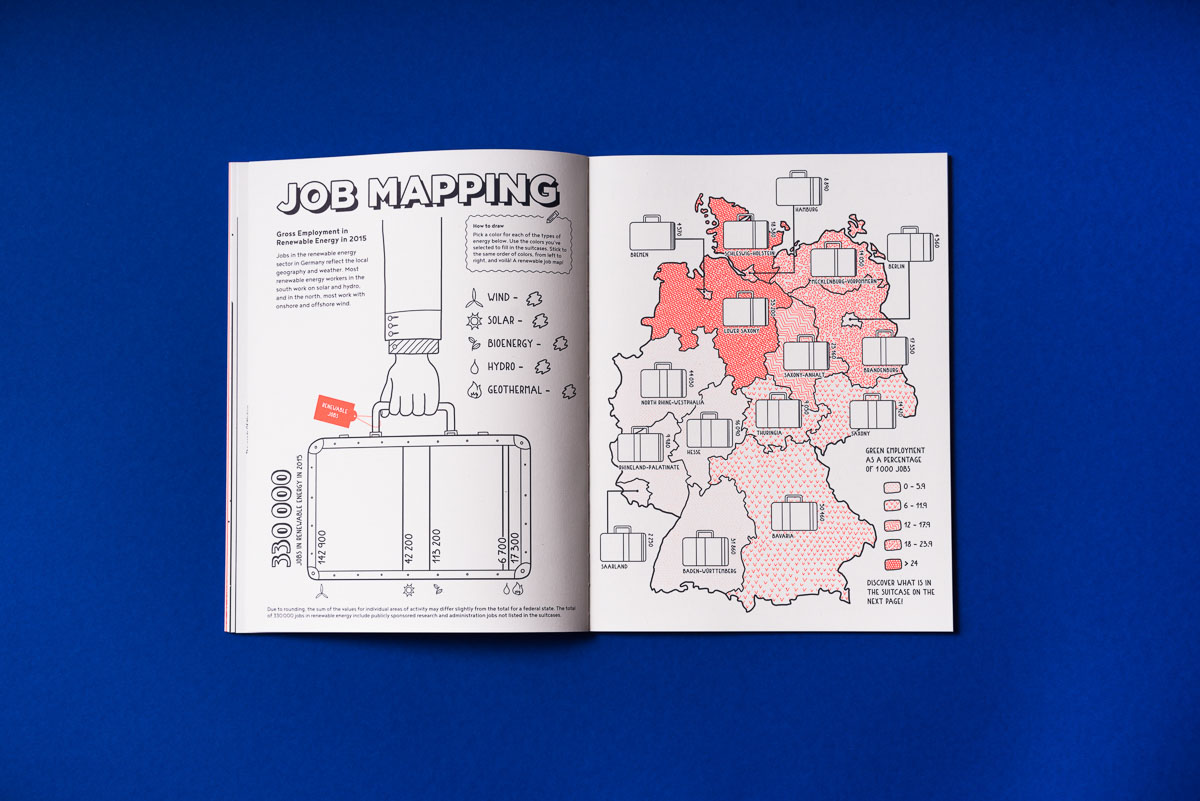
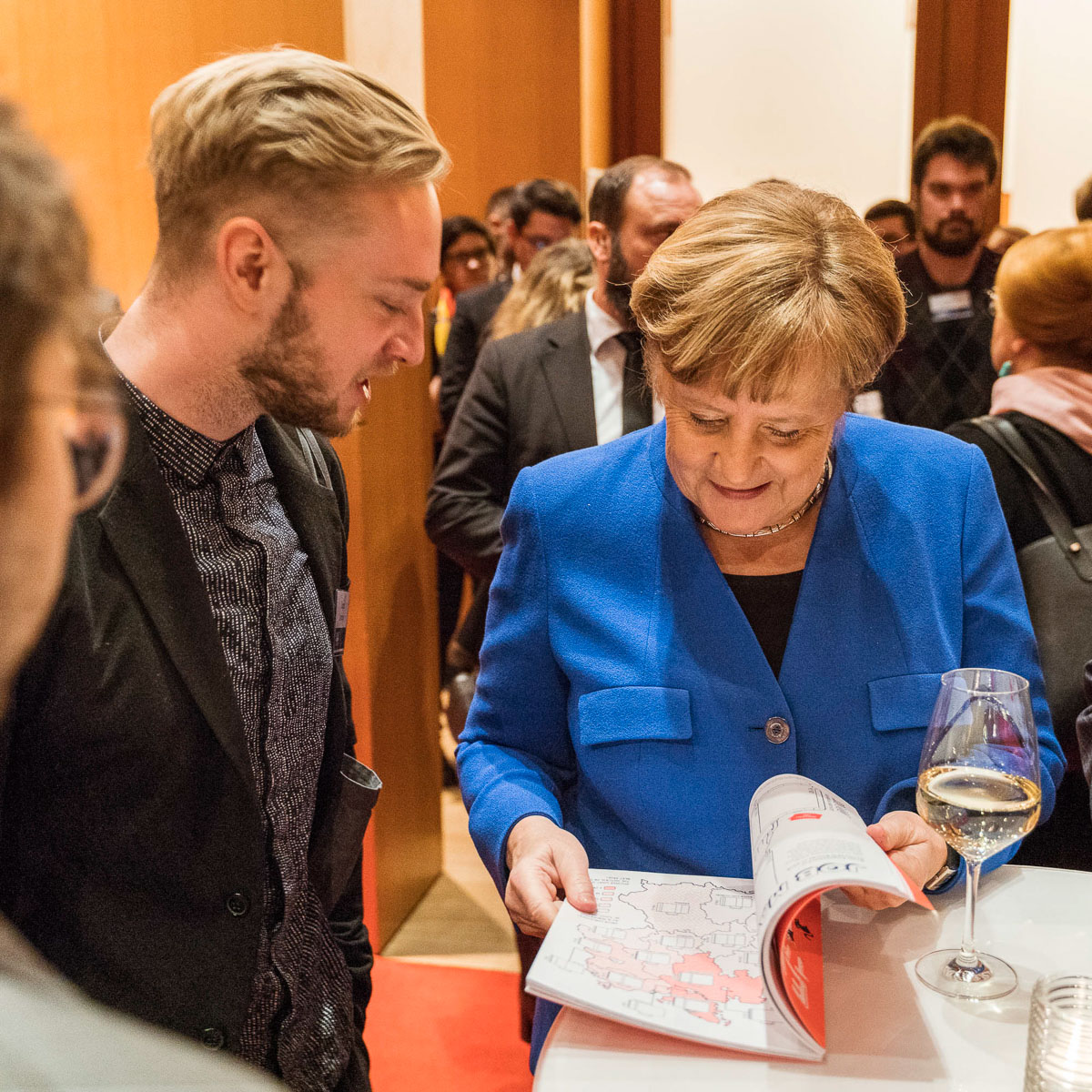
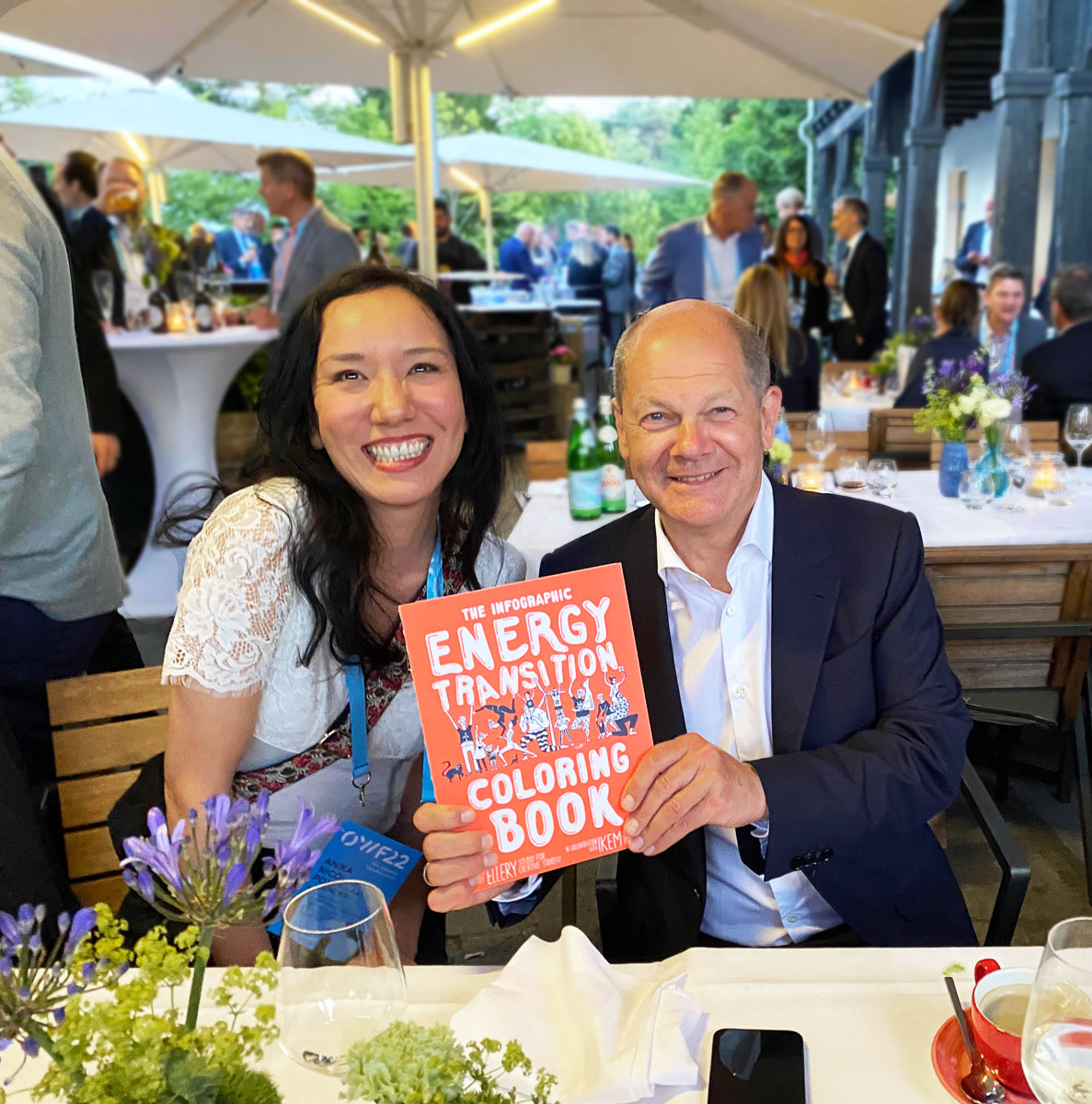
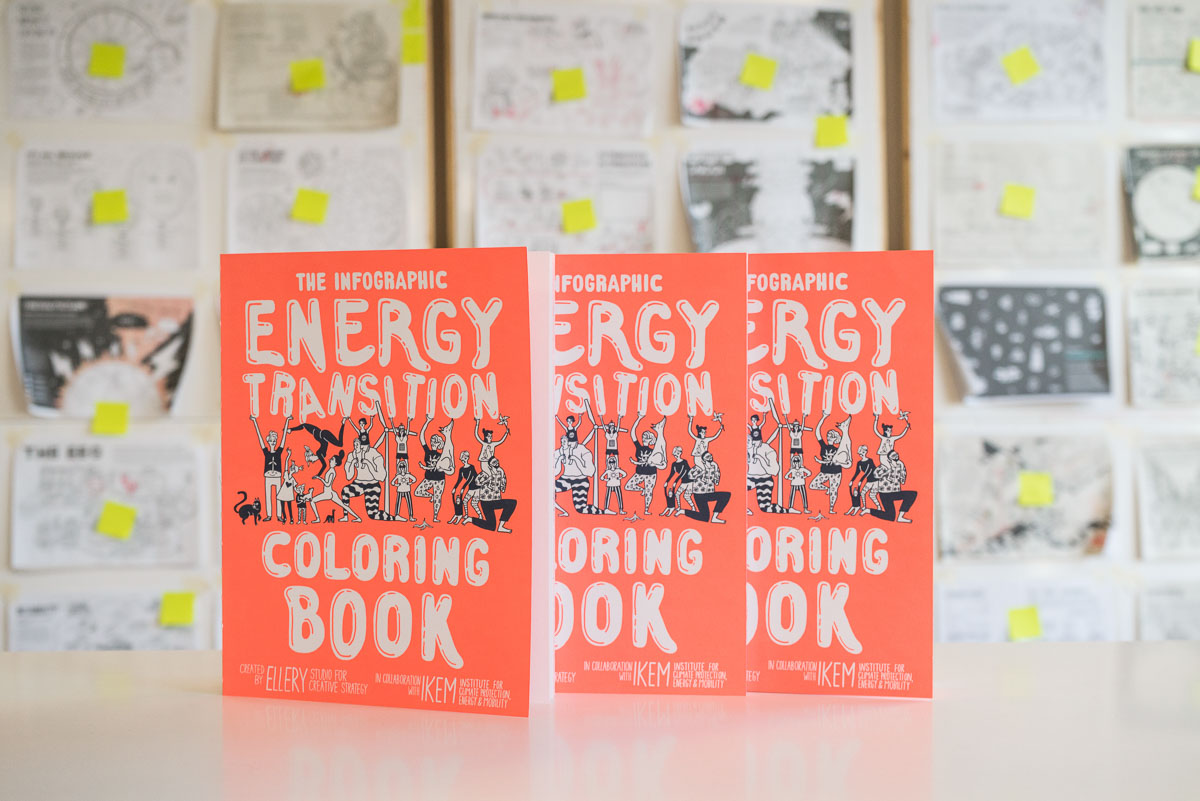
Few of our projects have made as many waves as our energy transition coloring book. An innovative format that not only set new standards in science communication and won nearly every major infographic design award, but also ended up in the hands of two German chancellors. Created jointly with the Institute for Climate Protection, Energy and Mobility (IKEM), it translates complex energy transition topics into infographics you can color in.
The Challenge
When Complexity Meets Creativity
At a time when climate protection and the energy transition rank among society's most important challenges, we faced a communication dilemma: the topics are highly complex and relevant to everyone, yet traditional formats often only reach experts. This gap became the starting point for our project. In 2017, the energy sector was desperately searching for fresh communication formats, and experts struggled to explain their work to friends and family in an understandable way. At the same time, we observed a growing trend toward slower, analog activities as a counter-movement to digitalization. These observations led to a bold idea: communicate the most complex topic in the simplest possible format.
Deliverables
33 Topics, 80 Pages, One Visual Language
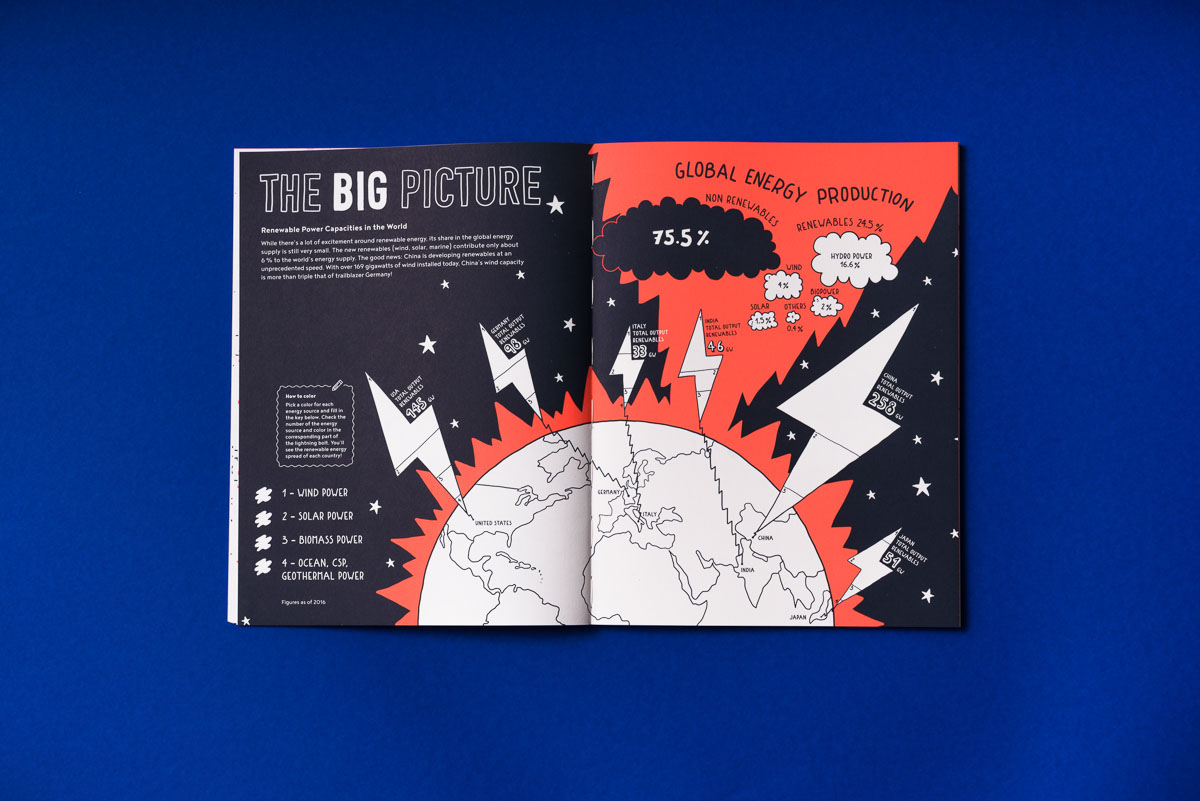
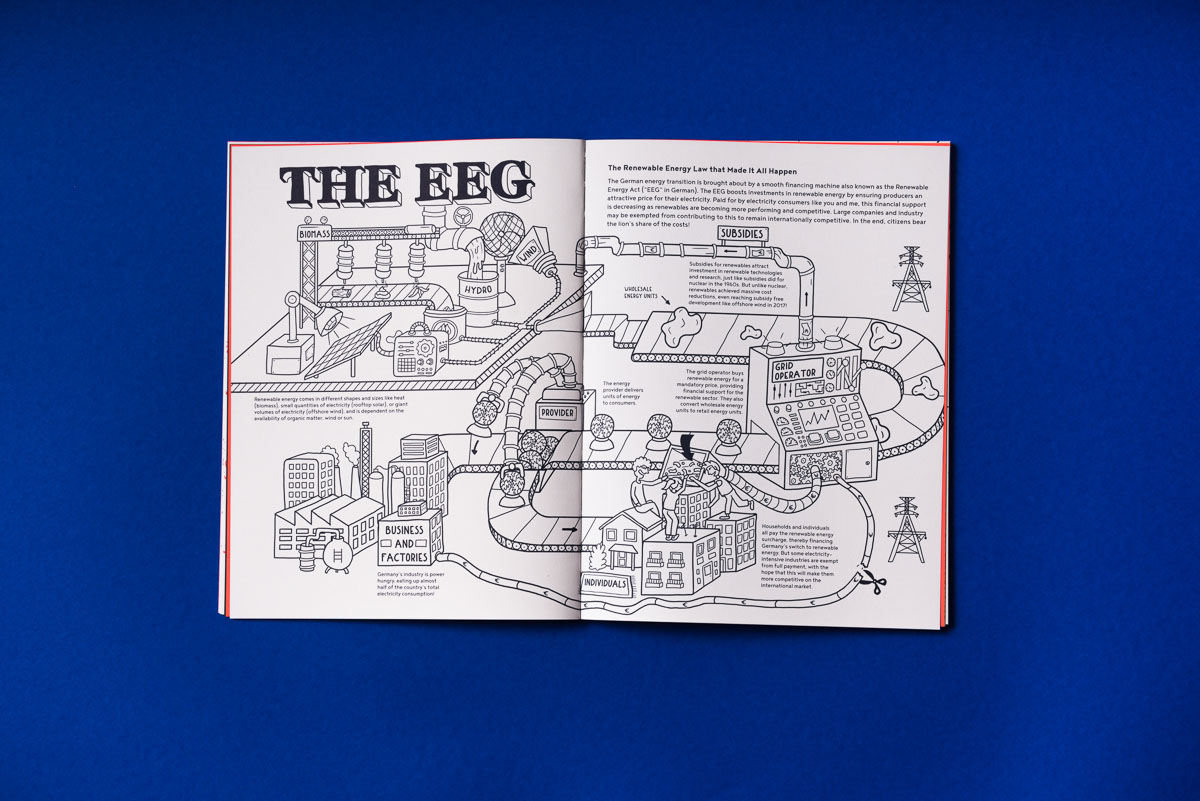
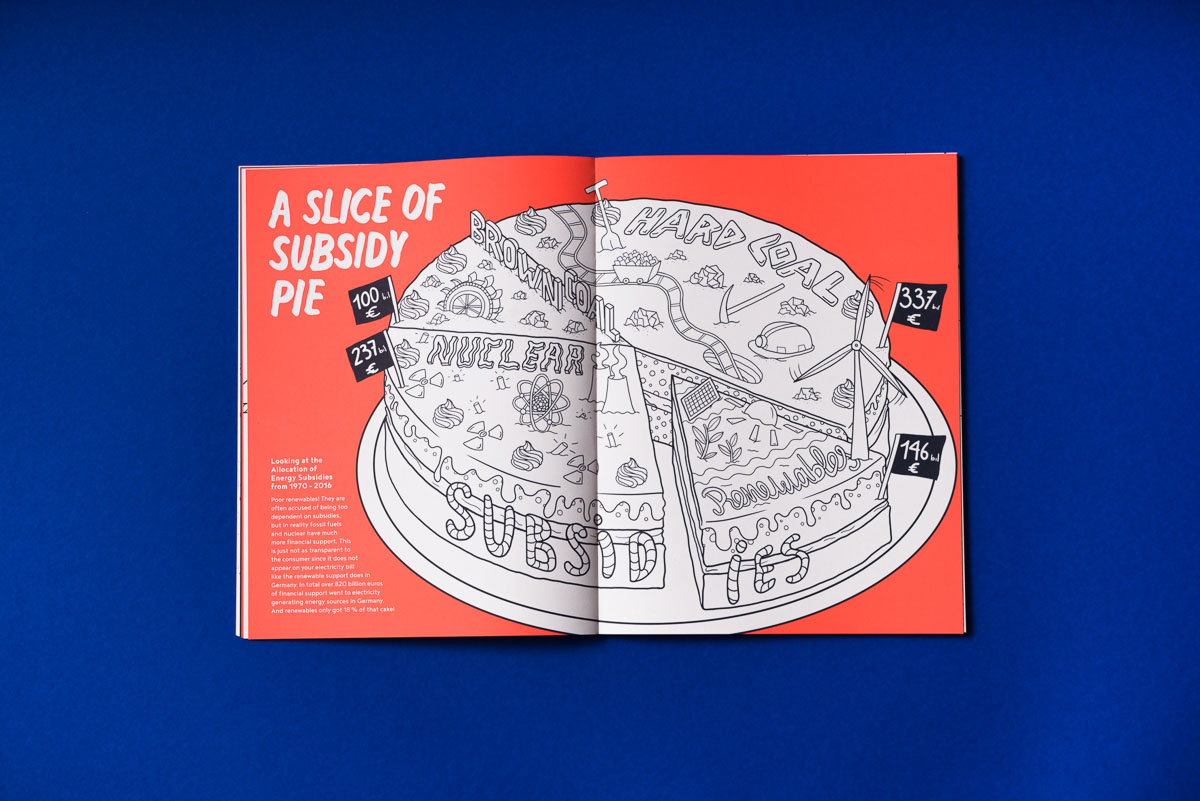
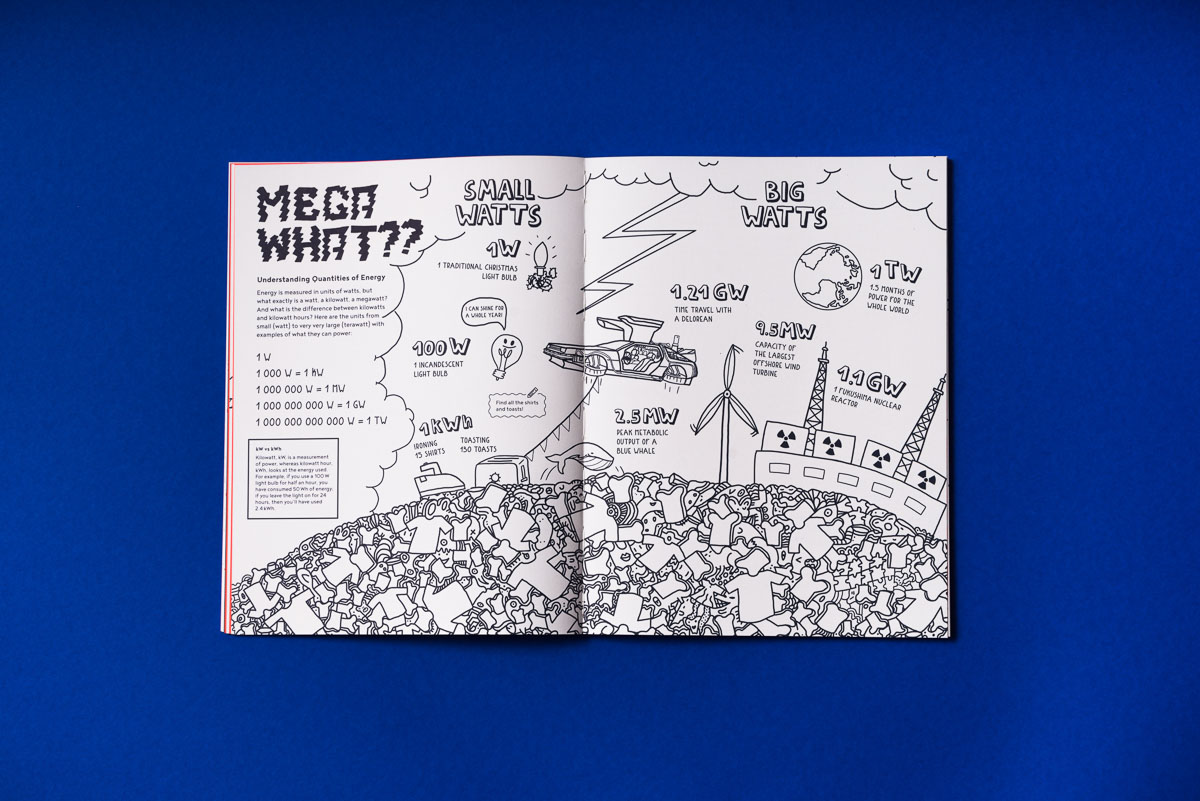
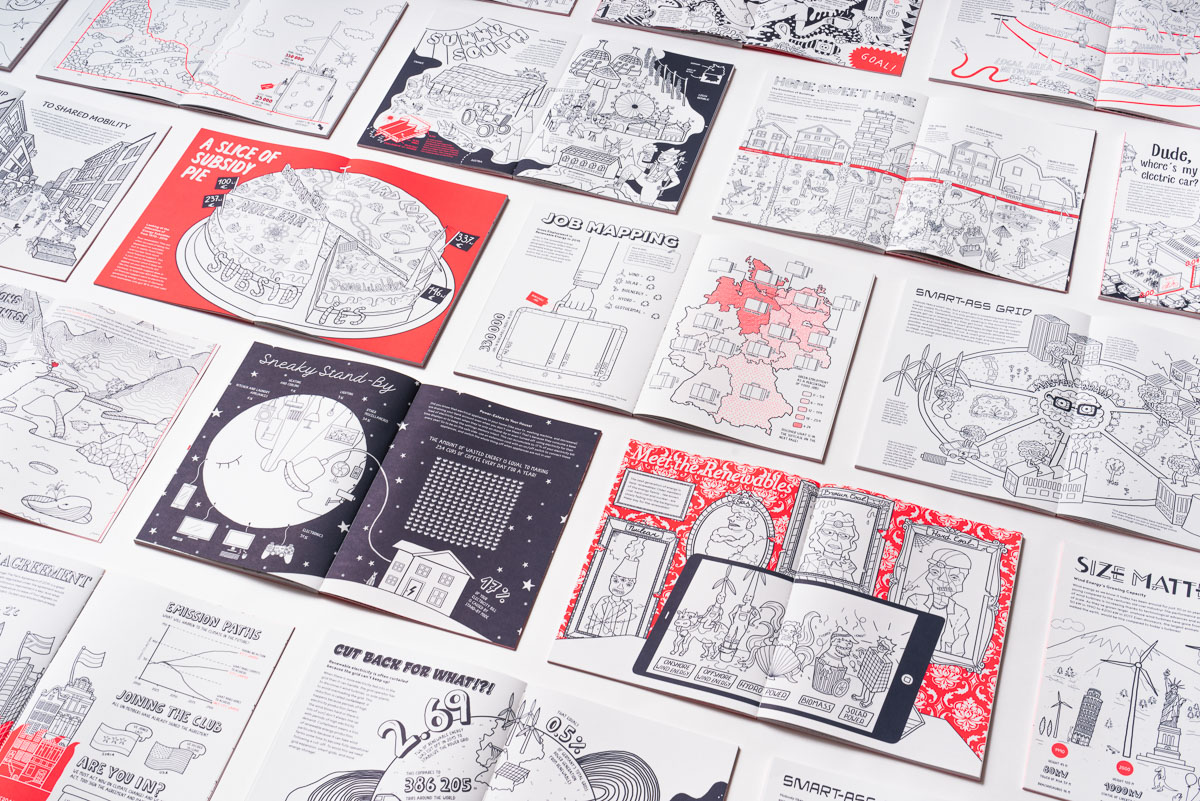
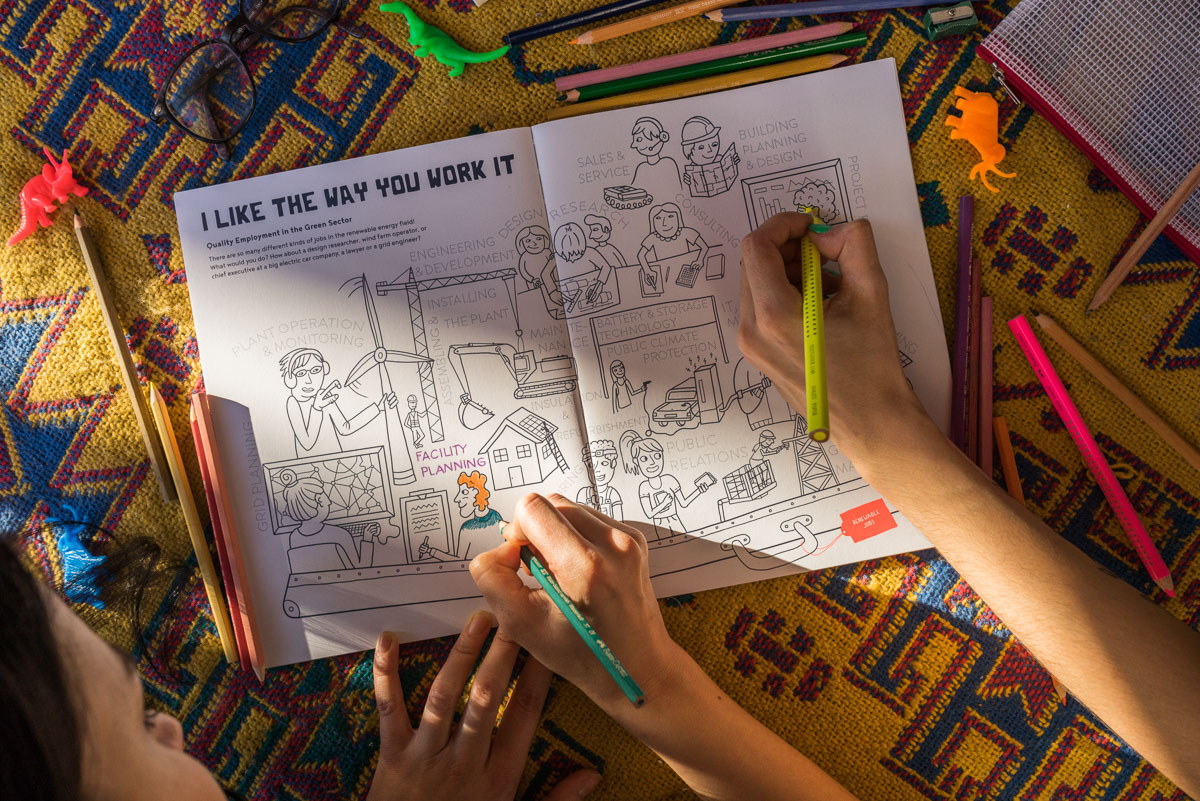
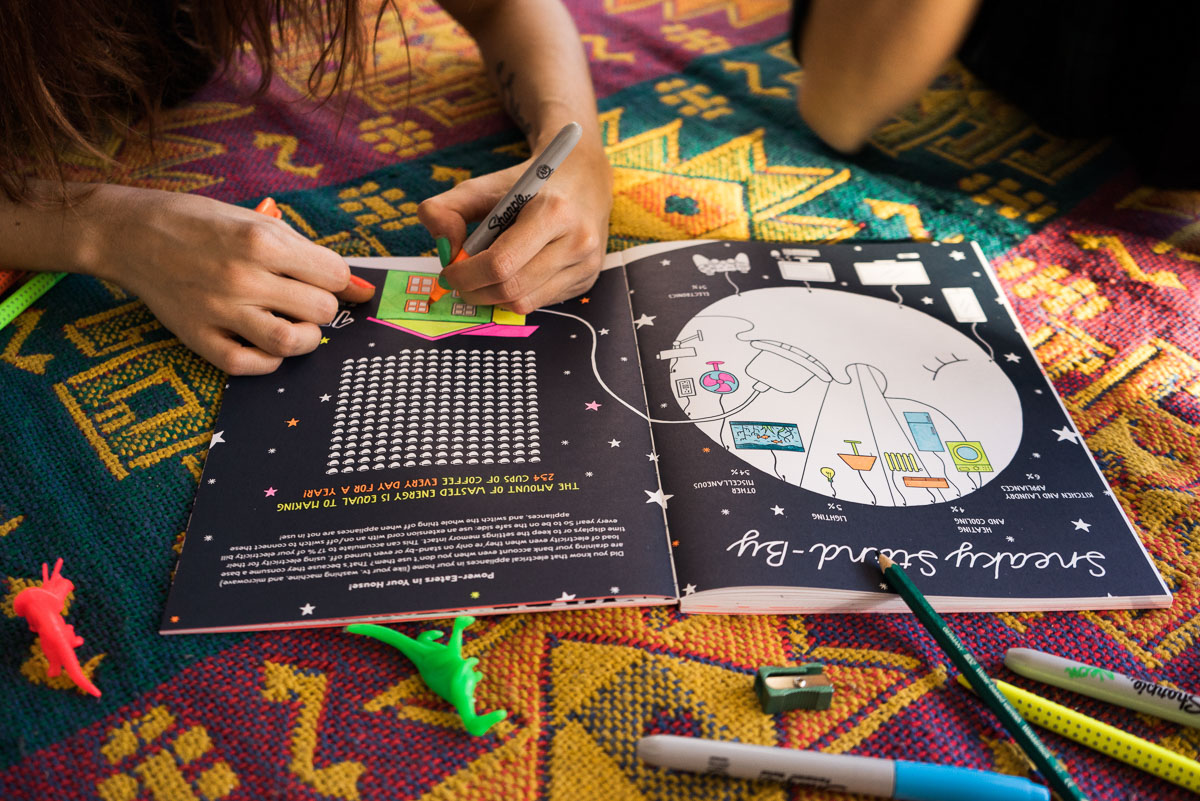
We developed 33 energy transition topics as infographics you can color in. The latest research on subjects such as energy subsidies, the Renewable Energy Sources Act, smart grids, mobility, the Paris Climate Agreement, CO₂ emissions, power-to-X, and new green job and technology markets is made accessible to everyone as a result. The outcome: an 80-page work that went through three print runs and expanded the scope of science communication.
1
Format
A low-threshold coloring-book format that breaks down barriers and invites exploration.
2
Content
A scientifically grounded presentation of the energy transition and its global significance.
3
Interaction
Active knowledge acquisition through coloring and hands-on, tactile experience.
4
Design
Clean linework for optimal coloring while remaining visually engaging.